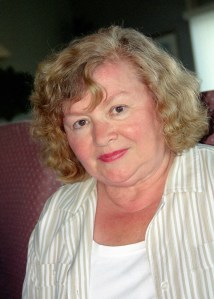
Next week is the 11th anniversary of my mother’s death. It seems like yesterday, but a decade has passed. In that decade, my father Frank, my aunt Alberta, my wife’s mother Mahin, my good friend Carl, and many others have died: an entire generation has fallen. Those of us still alive have also changed. My first wife is in memory care, the health of some family members and in-laws have taken concerning turns, and many of us are poorer, less hopeful, and more resigned to our fates than ever. The following is an entry I made in my Personal Photography Diary shortly after my mother’s death. I sporadically cultivate many diaries, logs, notebooks, and this blog. Sorry, I cannot help myself. Most of what I write eventually embarrasses me, but this diary entry is a rare exception.
It’s been over a year since my last PPD entry—this diary, like my lifelong photographic affliction, waxes and wanes. For most of 2013, it’s been a long, painful wax. Much has happened. The biggest change in my life was the death of my mother. I wrote about this in my blog: see Evelyn’s Eulogy. Mom died almost one year after my last entry. The annular eclipse trip to Page, Arizona, was my last outing with her. Of course, I didn’t know it at the time.
What I have said about this publicly is what I felt people could accept. You cannot be a completely self-centered shithead while people are mourning. My dad, brother, sister, wife, in-laws, and outlaws1 have complex feelings about Mom. We all loved her, and we were left stunned by her sudden, wretched death from brain cancer. I’ve seen four grandparents, four outlaws, and two friends die of various causes, but Mom’s death was the worst of the lot.
Her cancer was discovered one morning when she started babbling while my parents were driving home from grocery shopping. Dad couldn’t understand a thing she was saying and wisely called 911. Everyone’s first thought was a stroke, but further examination led to the discovery of a “growth” in her left hemisphere near her brain’s speech centers. She was operated on. Most of the tumor was removed, along with part of her speech centers. From that day on, she couldn’t read, write, speak clearly, or understand much of what was said. Her cancer surgery turned her into a different person. After assessing the tissue removed from her brain, she was diagnosed with stage 4 glioblastoma multiforme, just about the worst cancer you can get. This cancer is so deadly it’s nicknamed The Terminator. Glioblastoma makes Arnold’s Terminator look like an underachieving pussy-robot. Nobody escapes glioblastoma multiforme; it’s just a question of how long it’s going to take to kill you and how much you suffer while dying.
In Mom’s case, it took two and a half months, and her last month was hell incarnate. When I found out what she had, I did a little Googling and quickly found statistical survival curves for her cancer. They were so depressing that I stopped reading and decided to be hopeful. I knew it was irrational, but there were no other options. I didn’t expect her to make the median survival time of thirteen months. That figure came from younger and healthier patients. Mom had a long list of ailments: two knee replacements, Crohn’s disease, dangerously low blood pressure, and obesity. She had almost died six years earlier from a terrible Crohn’s flare-up. She was in no shape, either mentally or physically, to fight her cancer. That’s probably why she so calmly absorbed the bad news while my dad freaked out.
When people find growths in your brain, it’s never good news, but until the verdict came in, I don’t think Dad seriously thought Mom was going to die. We never really know the people we have known all our lives. They can surprise us right up to their last breath. Dad surprised me while Mom was dying. He chose to fight and was reluctant to curtail treatment right up to the end. He kept encouraging her to stick with her chemotherapy and radiation treatments despite the discomfort and inevitable pointlessness. Two weeks before mom died, Dad and I sat with one of her Oncologists. He gave us the “it’s hopeless talk” and advised we transfer Mom to hospice. Dad didn’t want to hear it and complained afterward about how “that Jewish doctor just wants to give up.” Dad has frank opinions but curtails them. He was mad, frustrated, and still getting used to Mom’s situation. We all were.
I was taking PTO to see Mom. I was going to wait, but my ex-wife Ruth had flown out shortly after hearing about Mom to help take care of her and say goodbye. Ruth had just lost her younger sister Miriam to ovarian cancer in January and was taking time off. Miriam was only fifty-four, and her death was a shock to all of us. Then, news of my mother spread. Ruth always liked my parents more than she liked me and decided to make the trip from Ontario to Montana one last time. Shortly after she saw Mom, she got me on the phone and said I better get out there; it was worse than I thought, and Ruth, a brilliant and experienced palliative care physician, knew it. I cried twice during this entire ordeal. While I was on the phone with Ruth and after Mom died in her living room. Ruth didn’t have to do what she did. I will always be grateful for her kindness when it mattered the most.
I made quick arrangements and flew to Bozeman. I had been warned, so I wasn’t shocked when I saw Mom, but, as I said, she was a different person. The brain surgery had robbed her of the resources she most desperately needed. Mom was always a courageous and capable woman. She met her trials with guts and never flinched or whined. Facing certain death is the most challenging thing we will ever do, and Mom had to face it with part of her brain missing. She was fearful, confused, depressed, and so sad. It still breaks my heart to think of it. I did what little I could. Mom didn’t want to be alone, so Steve, Aileen, and I took turns sleeping in her hospital room.
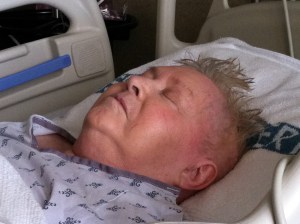
It wasn’t much, and I’m still mad at myself for wasting the last hours of her life. I did not rise to the occasion. We didn’t have deep end-of-life conversations; we didn’t start a terminal book club. Mom struggled to speak and understand. She wasn’t up to sustained conversation. We watched a little TV; she still enjoyed The Big Bang Theory; we helped her in and out of the bathroom and called her nurses to adjust IVs. A few days before I flew back to St. Louis, Mom was moved to a nursing home. Again, she wanted to go home, but Dad resisted. I meekly acceded, and I still regret it. She just wanted to be home.
Before I left, my son Jacob flew out to Montana. He had dropped out of Carlton and was fighting his own battles, but I insisted he see his grandmother one last time. He stayed with her in the nursing home, and Mom said he took good care of her. I had to get back to St. Louis. I was a “key resource” on a late project. Why the hell this mattered will forever trouble me. I expected Mom’s condition to stabilize, and I was planning to come back in a month or so. I thought she would last longer, but I was utterly wrong.
While I was back in St. Louis, Mali finally settled her demented mother, Mahin, in a suitable nursing home in Toronto and flew to Montana. She was furious about my mother’s treatment. It would have been better if Mali had gone sooner because she would have fought for my mother to go home. Except for my brother Steve, the rest of the family was too comfortable taking medical advice. Mom’s situation was hopeless. Her time was short. “Why don’t you do what she wants?” Mali repeatedly asked. From the start of this ordeal, Mali was completely in Mom’s corner and was angry at the rest of us for not fighting for her. Mom finally came home two days before she died. They set her up in a bed in the living room. She was seldom awake and, as a final injury, had lost her sight. Mali begged me to forget about whatever bullshit I was doing at work and fly back. My boss, Cassandra, echoed this and told me to go.
I made it back to Bozeman at noon. Mali met me at the airport, and we went straight home. Mom was in the middle of the living room. It was bright and sunny. Alberta, her sister, had made it from Seattle and was sitting on a couch beside her. The rest of the family, Steve, Sue, Brianna, Amanda, Brianna’s babies, and Dad were milling around the house. Mom was asleep and struggling for breath. I rubbed her badly IV-bruised arm and told her I was there; she seemed to breathe a little smoother. I am unsure if she heard me, but Mali insists she did. Shortly after my arrival, she died. It was like she was waiting for me. I retired to a chair in the corner of the room and burst into uncontrollable sobbing. This was the second time I cried.
Shortly afterward, the palliative care nurse came, officially declared Mom dead, and called the funeral home. The funeral home people, a young couple that had recently bought a funeral home in Livingston, came and gently placed Mom’s body in a dignified body bag. As they wrapped Mom up, Mali burst into tears, “I don’t like this,” she cried. She didn’t want Mom taken out of her beautiful home. To this day, she can’t stand thinking of Mom’s home without her. Mom, wrapped up like a mummy, was loaded into a plain van. The van doors were closed, and she was driven away. I don’t remember death dates, but May 7th, 2013, will stick.
“Outlaws” is a term I use for divorced former relatives.↩︎


 Analyze the Data not the Drivel