
Click here for a revised PDF version of this post. If you’re not rewriting, you’re not writing!
Recently, Caryn, the wife of my old ACS (American Community School of Beirut) friend David Holladay, called me out of the blue. The instant I took the call, I knew it was bad news. She told me that David had died last February (2024). If you’re wondering about the six-month delay, David and Caryn were not close. I’ve never met Caryn; we’ve chatted on the phone a few times, and I haven’t seen David since I left Beirut in the spring of 1969. After leaving Beirut, I maintained sporadic contact with David and my other Beirut school friends for over fifty years; we traded letters for a few years (this was before email and texting), but then, one by one, my old friends dropped away. And when I say dropped away, I mean died. Caryn’s call anointed me, the sole survivor of my little clique of ACS Beirut friends. They’re all gone!
I have mixed feelings about this. I won’t deny that I’m a bit proud that I outlived them all. None of them would have relished me standing over their graves, but here I am. I’m also keenly aware that I’m next, a prospect I do not welcome. Mortality does not suit me. I’ve always had Woody Allen’s attitude about death, “I don’t want to achieve immortality through my work; I want to achieve immortality by not dying.” Unfortunately, not dying isn’t an option. I’ll eventually join my deceased friends, but I’m hoping to live many more years and pad our average life expectancy, which, to be honest, isn’t impressive. My friends died young; they clocked out at 15, 22, 51 and 70 years. I’d have to live to 200 to bring our average up to respectable levels.
Death doesn’t just take away people; it kills most of their stories, too. My head is now the only place you’ll find some of my friends’ stories. When I die, these stories will vanish like they never happened. I can’t tell all their tales, but I can pass on a few, and now that they’re gone, along with their parents, many siblings, and friends, I can be frank about what I thought and felt about them. There is nobody left to insult or hurt.
I’ll start with some background. In the fall of 1966, my parents sent me to the American Community School (ACS) in Beirut, Lebanon. Our family lived in southern Iran in a small town called Agha Jari that year. My father was a petroleum engineer. He had managed to get a job with the National Iranian Oil Company and succeeded in dragging our entire family from the Utah outback to the southern Iranian outback. Oil reservoirs are rarely conveniently located. When my mother first heard of Dad’s Iranian scheme, we got out our world globe and spun it around looking for Iran. Americans have always sucked at geography. When we located Iran, I could see something going out of my mother. She was an ambivalent adventuress soul, but she was already tired of following my father around. She had been following him ever since he had impregnated her with me at seventeen. My mother was just over eighteen when I was born. In the early 1950s, white Montana girls weren’t supposed to get knocked up before marriage, and lucky for me, abortion was beyond the pale. So, my parents got married and started their family early. My parents and grandparents never made a big deal about my parent’s wedding anniversary. They didn’t want to draw attention to the short interval between my parent’s wedding and my birth.
I may have precipitated my parents’ marriage, but they had their reasons for getting out from under my grandparent’s thumbs. As a child, I picked up on the tension between my grandmothers. My paternal grandmother Helen always felt Dad had made a mistake by marrying so young. It took her decades to change her mind. My maternal grandmother Hazel resented Helen’s snooty condescension, and while they were civil, they didn’t reconcile until after my grandfather Frank died in my twenties. My parents put this behind them by getting married and leaving town. My mother enjoyed their first few moves, but my father never stopped moving. I was just twelve when we were spinning the globe in Utah, but we had already moved more than a dozen times. We’d move somewhere, drill a few oil wells, maybe only one, and then move again. It was draining, and my mother was tired of it. She wasn’t thrilled about moving to Iran but consented; her adventurous side won. Iran would be new and different. As for my father, he was moving on, his established pattern, and getting a chance to follow in the footsteps of his favorite uncle, John, my namesake, who had briefly run a construction company in Iran in the early 1950s. John was booted out of Iran in 1953 when Mosaddegh was elected and nationalized British and American firms. Of course, the CIA overthrew the Mosaddegh government – because nothing preserves democracy better than foreign-led coups – long before our family flew into Agha Jari before Christmas in 1965.
Ex-patriot schools in Agha Jari only went to the 7th grade, and I was already in the 7th grade when we moved to Iran. I had been enjoying my new junior high school in Vernal, Utah. It was the first time I had experienced moving from class to class. In grade school, I sat all day in the same classroom, looking at the same teacher and the same classmates, while contemplating murdering them all. I hated grade school. Yet, for a few months in grade seven, I enjoyed school. I particularly enjoyed my first encounter with basic set theory. New Math was in vogue those days. Nothing about New Math was historically new; it was more a Cold War panic than a sound mathematics curriculum, but I liked that intersections and unions on small discrete sets were so much easier than fractions. Maybe I could get into this school stuff. Then, I was dragged to Iran and plunked into a tiny single-room school. It was way worse than my Vernal grade school. In Vernal, all my classmates were in the same grade. In Agha Jari, I sat with kids from kindergarten to the 7th grade. I really, really hated school in Agha Jari. My parents took note and started the process of enrolling me in ACS.
The American Community School of Beirut was in 1965 what’s called a college prep school. Academic standards were very high. My class’s SAT scores were well into the high 90th percentile. Most of the kids were smarter than me and would go on to outstanding careers in many fields. Astonishingly, ACS still exists (2024) and is still called the American Community School despite the never-ending trauma Lebanon has endured and is still enduring. The Lebanese, like many Middle Easterners, have plenty of reasons to hate Americans. In September of 1966, my mother abandoned me in the lobby of the ACS boy’s dormitory, my new home, and then hopped in an airport taxi and drove away. She had to fly back to Iran to care for my father and siblings. I remember walking around the lobby after she left feeling sorry for myself, but I’ve never been able to sustain self-pity; it takes too much energy. I decided to check things out and went upstairs to find my room.
As a lowly 8th grader, I had to climb to the top of the dormitory building. Older students were closer to the ground level. Within minutes of finding my room, I met my now-deceased friend Richard Moore. By the end of the day, I met Bjorn Hopen, and after a few days of class, I met Ned Prothro and David Holladay. Richard, Bjorn, Ned, and David were my best friends in Beirut. I remember a few others. Todd Buffa, my hated enemy, immediately comes to mind. Todd bullied us in the 8th grade, but luckily, he didn’t return for the 9th grade. I don’t know what happened to him. I heard rumors he was killed in Vietnam: good news, if true!
Now that they’re gone, I can publicly sort my friends. Richard was my best friend. We were roommates for two of the three years we were in Beirut. Ned and David come next. I liked them equally. I hung out more with Ned than David, but David and I shared a life-altering trauma (more about that later). Bjorn was more of a frenemy than a friend. He was a little ingratiating backstabber who could be disarmingly pleasant and likable if it served his interests. In 1966, all five of us were 8th graders. ACS sorted students into four academic groups: A, B, C, and D. A-groupers were the smartest kids. B-groupers were smart but second-tier. C and D-groupers were average and dullards. Even ACS dullards were better than average students in public schools. ACS placed 98% of its graduates in universities; many attended prestigious schools like Harvard and Yale. Both Ned and David ended up at MIT. Bjorn, Richard, Ned and David were all A-groupers. I was a lowly B-grouper, an inferior being. Fortunately, I was also the wildest, most out of control, entertaining, and toughest of our little group. I made lifelong impressions on my friends and many people I barely knew at ACS. And now that I am the last schoolboy standing, who can say otherwise. I’ll finish this tale by relating what I know of my friends’ deaths in the order they died.
Bjorn was the first to go.
In 1969, my family left Iran and moved to Edmonton, Alberta, Canada. I was sixteen years old and coming up on Vietnam draft age. While I never discussed the draft with my parents, I suspect keeping me out of the US, while not their primary consideration, was probably in the back of their minds when we moved to Canada. A lot of Americans sat out the draft in Canada. I registered when I turned eighteen, but I wasn’t being heroic or stupid. When I registered, the draft was running like an insane weighted lottery. When you registered, you were given a number that correlated with your chances of being drafted. Legal American residents of Canada were assigned numbers that rarely came up. None of my American friends in Canada were drafted, and I dodged that bullet as well. I’m still unsure what I would have done if I had been drafted. I might have been stupid enough to go, remember B-group, inferior being.
I first read of Bjorn’s death in one of Ned’s letters. We all wrote long, rambling, handwritten, insecure virgin teenager – man of letters – diatribes. Ned’s letters were the most erudite, Richard’s were the most coherent, and David’s were the best organized. I wish I had held onto their letters. Why didn’t I? In one of Ned’s letters, between his investigations on the distribution of prime numbers and the most effective masturbation techniques, Ned offhandedly mentioned that Bjorn killed himself.
What?
One of Richard’s coherent letters related some details. Bjorn got caught stealing from other dormitory students. This didn’t surprise me. Bjorn was a weasel. Being a hard-driving prep school, we were forced to study two hours every night except Sunday. On Sunday, we had vespers – sigh. Richard liked to buy an ice-cold Pepsi in a little store down the street from the boy’s dormitory and put it in his room to enjoy after study hall. Richard was into delayed gratification. He also enjoyed taunting Pepsi’less roommates like me. If I prostrated and begged, he would sometimes let me sip his precious Pepsi. Bjorn didn’t beg. He just stole. Sometimes, he would sneak into Richard’s room and guzzle half of his Pepsi. It pissed Richard off. Bjorn didn’t just sip Pepsi. He stole some of my books and even lifted socks. Bjorn took things from everyone except Todd. Todd once beat the crap out of him; I don’t know why, but it was one time I didn’t mind his bullying. So, when Richard related that Bjorn kept stealing after we left Beirut and even upped his game to taking valuables rather than socks and Pepsi sips, it didn’t surprise me.
Bjorn may have been a low-grade kleptomaniac, but he was brilliant. He fluently spoke three languages: Norwegian, English and French. His grades were perfect, and, having skipped a grade, he was a year younger than the rest of us. On a pure IQ basis, Bjorn was probably the smartest of us. He was also a coward and weakling. On one occasion, when forced to defend himself, Bjorn ran. It’s better to be beaten up than to run. You will cower through life if you don’t learn this early on. I both admired and detested Bjorn. When he wanted something from you, he could make you forget all his duplicitous shit and be an exemplary friend. My feelings about Bjorn oscillated between warmth and wanting to kill and butcher the little fucker. You know, normal teenage boy stuff. After being caught stealing something that mattered (I don’t know what it was), the school notified Bjorn’s parents. I never met his parents, but judging from what happened next, they must have been strict disciplinarians. Richard said Bjorn’s father severely punished him. He was kept out of school for a while, but after returning to the dorm, he left school, checked into a nearby hotel; it was easy for minors to do this in Beirut, and then took a lethal dose of sleeping pills. Bjorn was fifteen years old when he died.
My first reaction to his death was pure anger. You selfish little cunt. I felt sorry for his parents, and I still do. Bjorn’s parents are dead now, but they probably spent the rest of their lives wondering what they did to merit such treatment. After my anger subsided, I felt a nasty smug satisfaction. Well, Bjorn, it turns out that you weren’t so smart!

Richard was the next to go.
I was much closer to Richard than my other friends. We corresponded for years after leaving Beirut and traded long-distance phone calls in an era when long distance wasn’t cheap. We both ended up in university. I went to the University of Alberta, and Richard attended a small college in Pennsylvania. During our summer break between our third and fourth years, Richard called me and said he was coming west on a college geology field trip. Richard once told me that he used to idolize the American West, at least until he met me! As a Montana boy, I was a bona fide westerner, but I didn’t meet Richard’s expectations; it was a “never meet your heroes” sort of thing.
We agreed to meet near Mount Rushmore. I had a good summer job working the oil fields near Slave Lake, Alberta, but it was shiftwork with big blocks of off time. I took a few days and drove the 1200 miles from Slave Lake to Rushmore. I did it in one mad butt-numbing all-day and overnight shot. This was my first trip to Rushmore. In the 1970s, Rushmore looked like it did in the classic Hitchcock movie North by Northwest. I was impressed. I was even more impressed by the massive Crazy Horse Memorial that is still being carved about twenty miles from Rushmore.
Richard and I were delighted to see each other. I knew from his letters and calls that he was struggling. It wasn’t his coursework. He was doing fine in college, better than me, but his social life troubled him. He was lonely, depressed, and terribly sad that he didn’t have a girlfriend or any close friends – aside from me – but then I didn’t count. We stayed up all night talking and watching the stars from the pitch-black grounds of a small motel near Rushmore. It was a clear summer night, and the summer triangle stars were almost lost in the Milky Way’s backbone. Early next morning, I left to drive back to Slave Lake.
I didn’t hear from Richard again until he called me in our fourth year a few weeks before Christmas. He called from a payphone in a US/Canada border town (I cannot remember which one) and said he was driving to visit me in Edmonton. It was completely unexpected. He said the Canadian border officials wouldn’t let him in because he carried too much cash. I told him to try another crossing and lie; it worked. Borders have never been secure! When he arrived in Edmonton, he had a long story to tell. In his last year at college, he suffered from severe depression. He was hospitalized and put on lithium drugs. Depression drugs in the 1970s sucked. They often did more harm than good, but the treatment seemed to help him, and in a few weeks, he was discharged. He tried finishing his degree but couldn’t concentrate. Then, suddenly, he decided to see me. I still don’t know why he had to see me. Maybe I made him happy.
His arrival in Edmonton was not convenient. I had no place for him to stay. I was living in a student cooperative at the time. The cooperative rented dilapidated houses near the university and stuffed them with poor students. When Richard showed up, I was the cooperative’s treasurer, meaning I had the delightful chore of collecting rent from all the little cosplaying student Marxists and Maoists who felt rent should be free.
“Like, stop suppressing us, man.”
Sadly, for the commies, I was a mean bastard and locked rent delinquents out of their rooms until they paid up. Until the checks clear, fuck the revolution! The cooperative was full, so Richard crashed on my room’s floor. He didn’t mind, and neither did I. We had a grand time in Edmonton. He certainly didn’t help my grades. I wasted so much time with Richard that I barely passed my last year. Richard didn’t go to school. He got a job as a night watchman and spent his free time walking around the city. He was still taking drugs for awful canker sores, and he was still depressed. It was around this time that Richard fixed his virginity problem by hanging out in bars and hiring prostitutes. One weekend he smuggled a whore into the cooperative and did the deed in my bed. I don’t remember how much he paid her, but she did such a good job he tipped her. Richard was always the gentleman. I was impressed. I lacked the guts to hire prostitutes; I was always that guy who worried about venereal diseases. My reticence probably saved my life a few years later when I had a chance to screw a skinny Ghanaian woman that, when I think back, probably was suffering from AIDS. After his prostitute encounter, Richard was tested for VD. He delighted in explaining how the nurse dipped what sounded like a giant Q-tip in his penis. He didn’t catch anything, which, as it turned out, may not have been a good thing.
One of my best memories of Richard was spending Christmas with my family in Calgary, followed by a winter snowshoe camping trip in Banff. On my Christmas break, we drove Richard’s clunky old car down to Calgary and stayed with my parents. I remember Richard was touched by a Christmas gift my mother got him. He almost cried when she handed him a big, wrapped present. After Christmas, we drove out to Banff. It was one Canadian place Richard desperately wanted to visit. He wanted to hike, but it was winter. The snow that year was deep and magnificent. I talked him into giving snowshoeing a try. He loved it. Banff was cold, at least -20C, and the trail we wanted to snowshoe up was “technically” closed, but we ignored the trail closure and dragged two sleeping bags a piece up Cascade Mountain and slept in the open in -30C weather in a stunning snow-covered mountain meadow. Snow makes superb cushioning for sleeping bags. I’ve never been comfier while camping.
After Christmas, we returned to Edmonton. I resumed my coursework, and a few weeks into February, Richard decided to return home. I helped him pack up his car and watched him pull out of the cooperative’s driveway. I was both sad and relieved to see him go. I didn’t know it then, but that would be the last time I’d ever see him.
Without Richard to distract me, I knuckled down just enough to get through my last term. My grades were mediocre, probably not good enough to get into graduate school. I didn’t know what to do next but knew I didn’t want to get a serious job and start adding to the gross domestic product. By sheer luck, I was recruited by CUSO (basically the Canadian Peace Corps) to teach mathematics in Ghana. A few months later, I was teaching high school in Tamale, Ghana. Of all the jobs I’ve done over a long and embarrassing career, I liked teaching the best. But sadly, I could make three to four times more money as a programmer than I ever could as a teacher. So instead of putting up with undermotivated horny teenagers, I put up with corporate fools and tools instead. “Work,” for me, remains a four-letter word.
Near the end of my second term in Tamale, I got a letter from Richard’s mother. I once met Richard’s mom in Beirut. She was a bit older than my mother and a lovely woman. She took Richard and me to a nice Beirut restaurant, a nice break from our grim dormitory gruel. I could tell from her handwriting on the envelope that it was bad news. I opened her letter and read that Richard had killed himself by firing a shotgun into his head! Like Bjorn, he had rented a room, checked in, and then checked way out. But, unlike Bjorn, Richard didn’t opt for pussy boy sleeping pills; he made sure he wouldn’t survive by using a shotgun. As I read Mrs. Moore’s letter, I started shaking. I was surprised by my body’s reaction to Richard’s death. Why am I feeling like this?
I took a day off teaching and tried to answer Mrs. Moore’s letter. She was begging me for details about our time together in Edmonton. She was grasping for anything that might help her understand her son’s death. She was also very worried about her husband. Richard and his dad were very close. Whenever Richard spoke about his dad, it was with unusual affection. I respected and admired my dad, but I didn’t have the same connection with him that Richard had with his father. Richard’s suicide had deeply, deeply hurt Mr. Moore. Mrs. Moore was probably thinking she might have to deal with a double suicide. I sat on Mrs. Moore’s letter for a few days but never replied. The days turned into weeks, and I still didn’t reply. She even sent me a follow-up letter, to which I also never replied. It’s still one of the least considerate and cruel things I have ever done, and trust me, I am a vicious lifelong asshole. Richard was twenty-two when he killed himself.

Ned was the next to go.
Ned was the most curious and mathematically gifted of us. Even at ACS, he was years ahead of everyone in math, but despite his brilliance, Ned was a troubled child. When I met Ned, he lived with his bitterly divorced father in Beirut. Ned’s dad had some affiliation with AUB (American University of Beirut). When his marriage collapsed, he got Ned. I always wondered if Ned’s mother didn’t want him because his father didn’t behave like a man who had fought for custody. Ned’s dad neglected him. You could tell by Ned’s body odor. Ned was often dirty; you could smell him coming. He also had appalling dental hygiene and wore ratty clothes that were two or more sizes too small. Once, when we were sneaking down to the cornice (the Mediterranean Sea was just down the street) to dip our toes in the surf, I noticed that Ned’s shoes had holes in both soles.
Being neglected wasn’t all bad. Ned roamed all over Beirut, and I often accompanied him. Ned was a day student; he lived in Beirut and could go anywhere. Bordering students like me were supposed to stay in bounds. School bounds delimited a small section of supposedly safe streets within easy walking distance of the school. I ignored bounds along with many other rules. Rules are for the weak, fat, and stupid; they still are. On one of our out-of-bounds outings, Ned and I were caught shoplifting books. Hey, a boy must read. I was punished by being put on D-Pro. ACS had a graded disciplinary system that mirrored its academic groups. If you were a super good little boy, for six interminably long weeks, i.e., no demerits, no sneaking around after lights out, no getting caught off bounds, and so on, you got promoted to A-class. A-class of kids enjoyed a few privileges like staying up a little later or studying in their rooms instead of in study hall. If you broke the odd rule, and who hasn’t, you stayed in the default B-class. If you were a little bad, you would be slotted into C-class. If you broke many rules, you were punished in D-class, and if you were a beyond-the-pale juvenile delinquent, you were put on D-Pro. While on D-Pro, you were confined to your room except for classes and meals. I spent months on D-Pro during my Beirut years. Why be a good little boy for months to earn meager privileges when you can just break the rules and do whatever the hell you want? I believe I set a record for the longest time anyone was on D-Pro without being expelled. I was a cunning delinquent. The school had strict rules about drinking and drugs. Students were immediately expelled if they were caught with either, but there were no rules about blowing holes in walls with homemade bombs – more about the bombs later. I forced ACS to expand its rule book. It was my greatest achievement. Ned was often in on my shenanigans, and our misadventures had a definite Huckleberry Finn vibe.
We used to climb into the attics of AUB buildings and time the fall of stones to the courtyards below. Ned was checking Newton’s acceleration due to gravity equation. The math checked out. On another occasion, we got ahold of old mechanical calculators. Ned found a shop, off bounds, of course, that sold office calculators. In 1968, office calculators were gigantic gear-laden metal dragons. They looked like typewriters on steroids. The shop owner didn’t mind weird little broke American kids computing cube roots on the clanky old machines. Ned posed problems that sent the beasts into infinite gear-grinding loops. Loops were a lot more fun in the days of motors and gears.
What I most admired about Ned was that he honestly did not give a ding-dong damn about what others thought about him. I’m sure the girls in our classes noticed his body odor, old clothes, and unkempt hair and said the usual mean teenage girl shit behind his back and maybe even to his face. He didn’t care. Ned even blew off our gym instructors, who took unseemly homoerotic pleasure in forcing us into the showers. Ned wouldn’t have it. He went to class all sweaty and smelly. Oh, he’d get punished, but that didn’t faze him. He also didn’t give a shit about his dad’s edicts. He ignored his dad like I ignored bounds. Ned was a 20th-century Huckleberry.
I’ve already noted that Ned’s letters were the best. They were little masterpieces. No topic was taboo. One of his missives outlined his masturbation experiments. He was on a perfect orgasm quest. Another tediously exhibited a long PL1 program – his favorite programming language – that efficiently implemented the Newton-Raphson method. Other letters included cartoon clippings and photographs. Ned started developing 35mm black and white negatives after I left Beirut. In a bit of synchronicity, I also got into developing 35mm black and white negatives in Edmonton. We compared techniques, and for the first time, I found something I was better at than Ned. Ned’s letters were better than social media and it pains me that I didn’t keep them. We corresponded for a few years after I left Beirut, but then Ned dropped off. We stopped trading letters. Maybe it was my fault. Maybe it was his. We were both moving on. Ned, as I mentioned earlier, went to MIT with David.
I didn’t hear about Ned again until David called after the 9/11 attacks in New York. David and I had reestablished contact via email after decades. We had a good long chat about 9/11 and – oddly – Ned. David didn’t buy the official 9/11 story. He couldn’t believe a small group could pull off such a stunt. He didn’t go down the fire doesn’t weaken steel beams (it does) rabbit hole or buy the controlled demolition (it wasn’t) nonsense, but he couldn’t accept that the government could be so inept. In 2001, I was a jaded cynic. I was confident that the US government couldn’t find its butthole with two hands and a flashlight. My stance has only hardened. Now I doubt they could manage it with a search party and butthole sniffing dogs. The US government has repeatedly demonstrated that it is capable of awe-inspiring stupidity. 9/11 magnitude fuckups are what I expect from these clowns. Just ask the guys who fell off that plane bugging out of Kabul.
David filled me in on what he knew about Ned. Ned started at MIT the same year as David but didn’t adapt well. He dropped out in his second year and disappeared. David lost track of him and learned years later that he had ended up in Stillwater, Oklahoma, living with his sister. Ned had some role at the University of Oklahoma, either as a tutor or a nonacademic staff member, and was still futzing around with prime numbers. He never married, had no close friends, and lived like a homeless person in a house. Ned’s sister contacted David when Ned suddenly died of a heart attack. Ned was fifty-one when he died. Ned should have done better in life. He had gifts. He wasn’t depression prone like Richard, and he had chances; he just didn’t seize them. I was surprised and saddened to learn of Ned’s death. His life ended just as mine was kicking into a better and happier phase.

This finally brings us to David. As I said, David died in February of 2024 at seventy. For the last few years, David’s health has been awful. I only learned of his problems because I was in the habit of sending David yearly emails asking if he was still alive. Two years ago, there was no response to my email, but a few months after sending it, David and his wife, Caryn, called. They told me about his health problems. He had been bedridden for weeks and could barely move his arms. He couldn’t work his computer and thus could not respond to emails. I don’t know what he suffered from. I’m not sure if even David knew. After hearing this news, I decided to ping him every six months to see how he was doing.
David was by far the most successful of our little clique. Unlike Ned, he navigated the rigors of MIT and graduated with an Electrical Engineering degree. After graduating, he married Caryn. Caryn is blind. Her blindness did not prevent them from having kids and enjoying family life. Caryn’s blindness also positively impacted David’s career. Together, they founded a software company that specialized in Braille printing. With David’s specialized software, blind people can print and read computer text. His software is still used worldwide, and I have no doubt it has helped many people. Good for you David! David’s achievements were noteworthy enough to merit a Wikipedia Page. Take a look; he was a genuine mensch.
Now for that trauma that David and I shared.
In 1968, the last half of my second Beirut year, David, a day student like Ned, came to school with a small bomb he had made by slicing open firecrackers with razor blades and pouring the powder into a small chemistry set glass bottle. David was proud of his bomb. He had even printed a label “Bomb Zero” (David was into zero-origin indexing) that he had glued to the glass bottle. We all admired his work and immediately started looking for something to blow up.
We found a crack in a concrete wall surrounding one of the school’s playgrounds. The bomb fit snugly in the crack. We waited until the coast was clear, then Ned, Richard, David, and I took the bomb outside, placed it in the crack, and lit its long gangly fuse. With the fuse lit, we all ran. I ran parallel to the wall while the others ran perpendicularly; they were putting themselves in greater danger. I remember thinking, “What the fuck, guys,” as I fled. The bomb detonated with a huge bang that echoed off the buildings around the playground. Everyone was far enough away to avoid injury. We returned to the blast site and inspected the damage. David’s bomb had blown a two-foot hole right through the concrete wall. We took turns poking our heads through the hole and enjoying the view of the other side.
The bomb was, forgive me, a blast. And, just to be clear, our gang was setting off bombs in Beirut long before Hezbollah.
When teenage boys do something spectacularly stupid, and it works out, do they conclude, “Well, that was idiotic – never again?” No, teenage boys resolve to do something even stupider. After “Bomb Zero’s” big blast, we decided an encore was mandatory, so we spent the next week walking around Beirut scouring shops for firecrackers. Then Ned, Richard, David, and I went to David’s parents’ apartment and started slicing open dozens of firecrackers with razor blades and pouring the fine black powder into “Bomb One’s” glass bottle.
While we were pouring powder, Ned had the insane idea of putting a coin in the bottle. He wanted to see what the blast would do to it. So, in went the coin, which David, the master bombmaker, tamped down with a small metal rod. As David handled the bomb, I remember leaning down to get a better look. In the last second, David raised his left arm, blocking my view, as “Bomb One” loudly detonated in his bedroom. The next instant, I was on my knees facing the other way. My eyes were tightly shut, and I remember calmly thinking, “Well, I’m going to open my eyes and see if I can see.” I opened my eyes; they still worked. Good. I looked up at Richard. His thick glasses were frosted with glass pellets, and his forehead was bleeding. Ned, who had been the furthest away, looked like a ghost. His face was blanched white, and his big dark eyes were wide and shocked. My ears were ringing, and the smell of burnt powder was everywhere. I got to my feet and headed out the bedroom door.
In the hallway, I saw David rush by holding a mangled, bleeding hand. I didn’t know how badly he was hurt, but he was spraying blood all over the hall. Lucky for us, an older girl, I forgot who was present. She came running when she heard the blast and had the presence of mind to wrap David’s hand in a towel and rush him to the hospital.
Ned, Richard, and I left the apartment, not knowing what to do, but we all knew we were in super deep shit. I can remember aimlessly wandering around Beirut streets until our ears stopped ringing. We were relieved we could hear again. Then, I noticed something was wrong with one of my eyes. We found a restroom with a mirror, where I found a small glass fragment in my right eye. I knew then that David’s last-second arm movement had saved my eyesight. The shower of glass particles that Richard’s thick glasses had stopped would have gone right into my face if David’s arm had not occulted the blast. For months afterward, David pulled tiny shards of glass out of his left arm.
I was taken to an eye specialist after discovering the glass fragment in my eye. I had eye surgery in the AUB hospital that left a small vision-obscuring scar on my right cornea. Even now, fifty-six years after the blast, the scar still slightly blurs my right eye. It’s been a lifelong reminder of my paramount dumbfuckery. As for David, the blast tore off the tips of his right hand’s thumb and two fingers. I’m sure David thought of the bomb every time he did anything that required two thumbs. His mangled hand was David’s lifelong reminder of his paramount dumbfuckery.
After our respective surgeries, David and I spent a few days in the same Beirut hospital room. Then, it was back to school, where I joined Richard on D-Pro. We were all punished. Richard and I were incarcerated for the rest of the term on D-Pro, while Ned and David, both day students, were banned from campus except for class hours. The bomb did not end our friendships; it strengthened them. During our D-Pro incarceration, Richard and I chiseled a small hole in the wall that separated our rooms so we could talk to each other. In our second year the school had separated us as we were too much trouble together. They put us back together in our third year, probably because they didn’t want to repair any more wall holes. Ned used his campus banishment to wander further afield in Beirut, and David enjoyed an unexpected notoriety showing off his skin-grafted fingers. Before the bomb blew off David’s fingers, girls ignored him. Afterwards, he was a chick magnet. I was jealous.
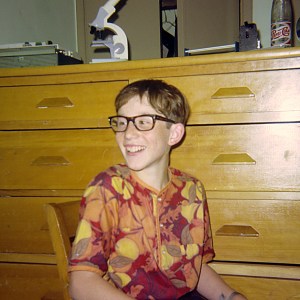
Honestly, I was jealous of all my ACS friends. I felt they were all smarter and destined for great things, but life didn’t go as expected, especially for me, the last schoolboy standing.


 Analyze the Data not the Drivel
Was googling about Todd Buffa, which brought me to this article, and ended up reading the whole thing. Great read. Im curious if you remember any Hannas from ACS – my uncles Richard and Philip, or my dad Ed (Allen)?
Thanks for commenting. I don’t recall any Hannas’s from ACS. It’s been a long long time. I looked up Todd Buffa after you mentioned him. I am not sure the Todd Buffa that became an esteemed musician was the same guy. Maybe! If so good for him. It’s great to see people do well even people you might not have liked.
Todd Buffa actually became a fairly successful jazz vocalist – was part of a group called rare silk in the 80s!